The annual olive harvest in the sacred valley of Laleş is set to begin on November 27, marking one of the most meaningful seasonal rituals for Ezidis. The gathered olives will later become the oil used to illuminate all the lamps of the temple.
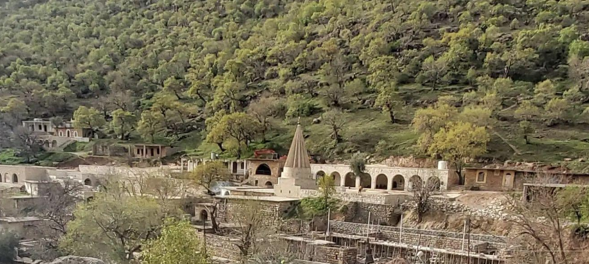
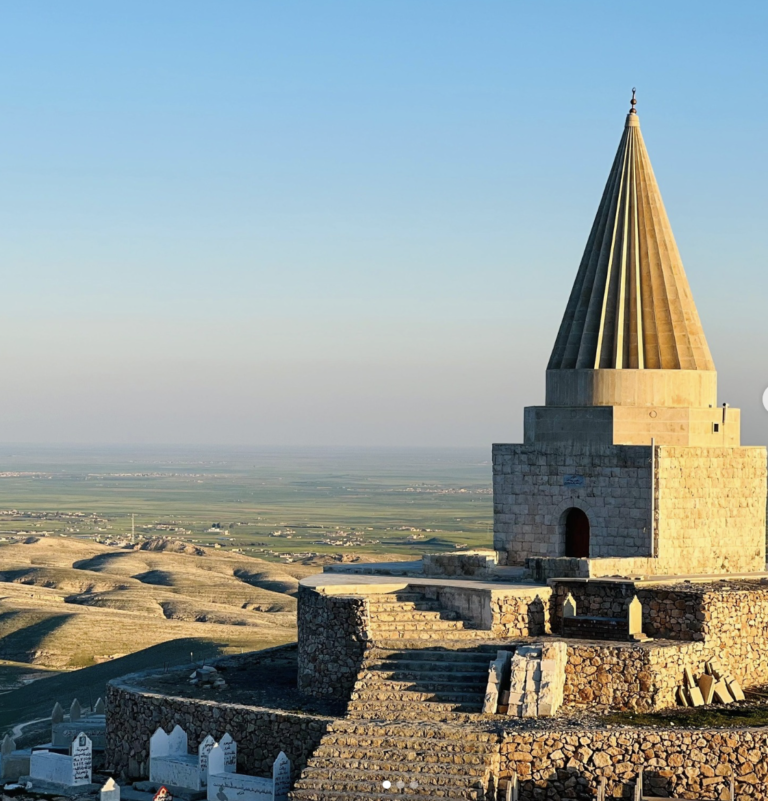
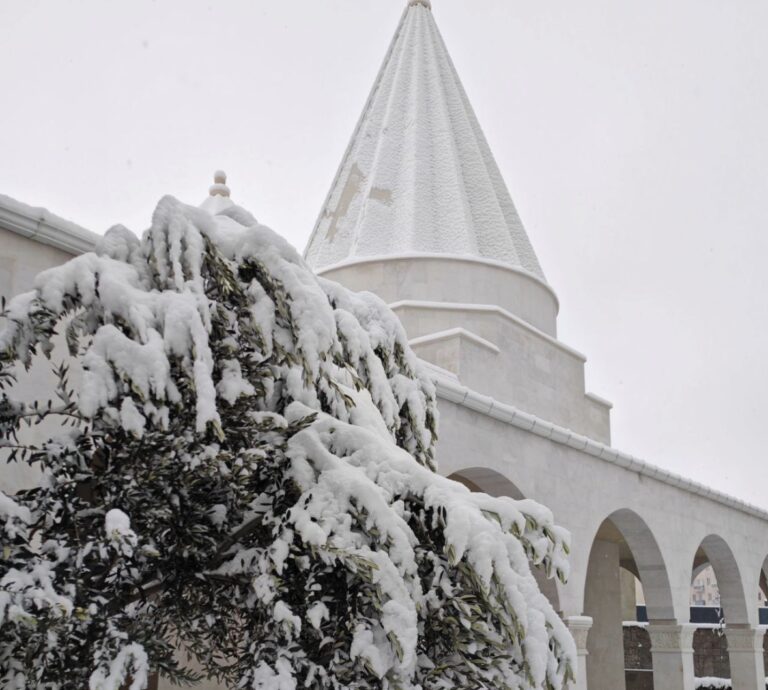
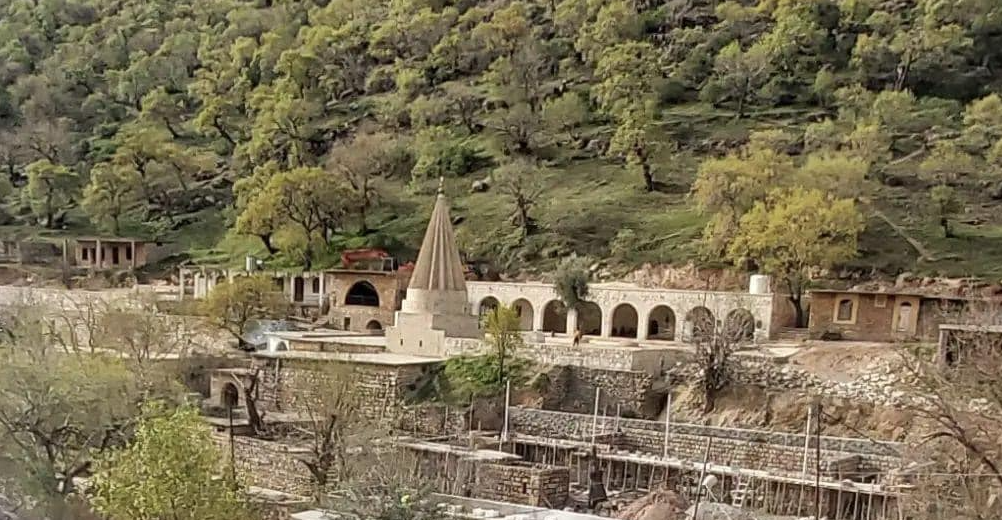
Lalish Temple surrounded by the olive trees that have been tended for generations.
The olive groves lie at the entrance to Laleş, with roughly 400 trees that have been tended for generations. As in every year, the harvest will open with the participation of the Baba Sheikh, together with representatives of the Mir family, members of the clergy, Ezidi women, and temple workers. The ritual is not simply agricultural; it is a continuation of an ancient rhythm, a shared duty of those who care for the temple and its light.
The process follows a communal pattern shaped by tradition. Men shake the branches, allowing the olives to fall, while women gather them carefully by hand and collect them into sacks. The olives are then transported to a designated storage site inside the valley. They will remain there until March, when they are pressed to produce the oil that fuels every lamp in Laleş. Parts of the Temple are lit every day, while the Lalish Temple is entirely lit every Wednesday and Friday evening.
This year’s harvest comes with the reminder of how deeply the valley is tied to the climate around it. Drought has reduced the yield compared to previous years, a concern shared across many agricultural regions. Yet even in a difficult season, the preparation of olive oil for the lamps remains an essential duty. The lighting of the 365 lamps, one for every day of the year, is inseparable from the spiritual continuity of the temple.
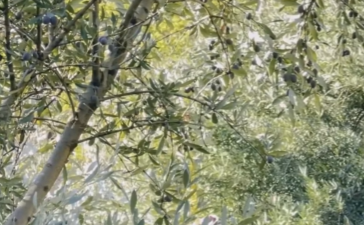

The oil is not merely fuel. It is part of a ritual rooted in the belief that each flame brings sunlight into Laleş, keeping the sacred valley aligned with cosmic order and the cycle of time. When the lamps burn, they echo the constancy of Sharfadin and its endurance across centuries.
As November gives way to December, the valley prepares once again to gather its olives, press their oil, and bring light to the temple. And as the lamps of Laleş begin to glow with the new season’s oil, Ezidis also move toward a period of celebration: Aida Êzîd, Aida Xwudane (male), and Aida Sêsims. These winter festivals, each with its own meaning in Sharfadin, mark a time of renewal, remembrance, and connection.