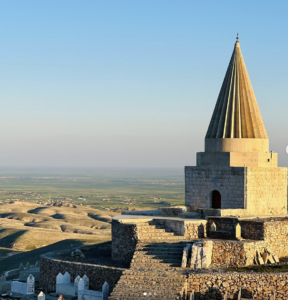
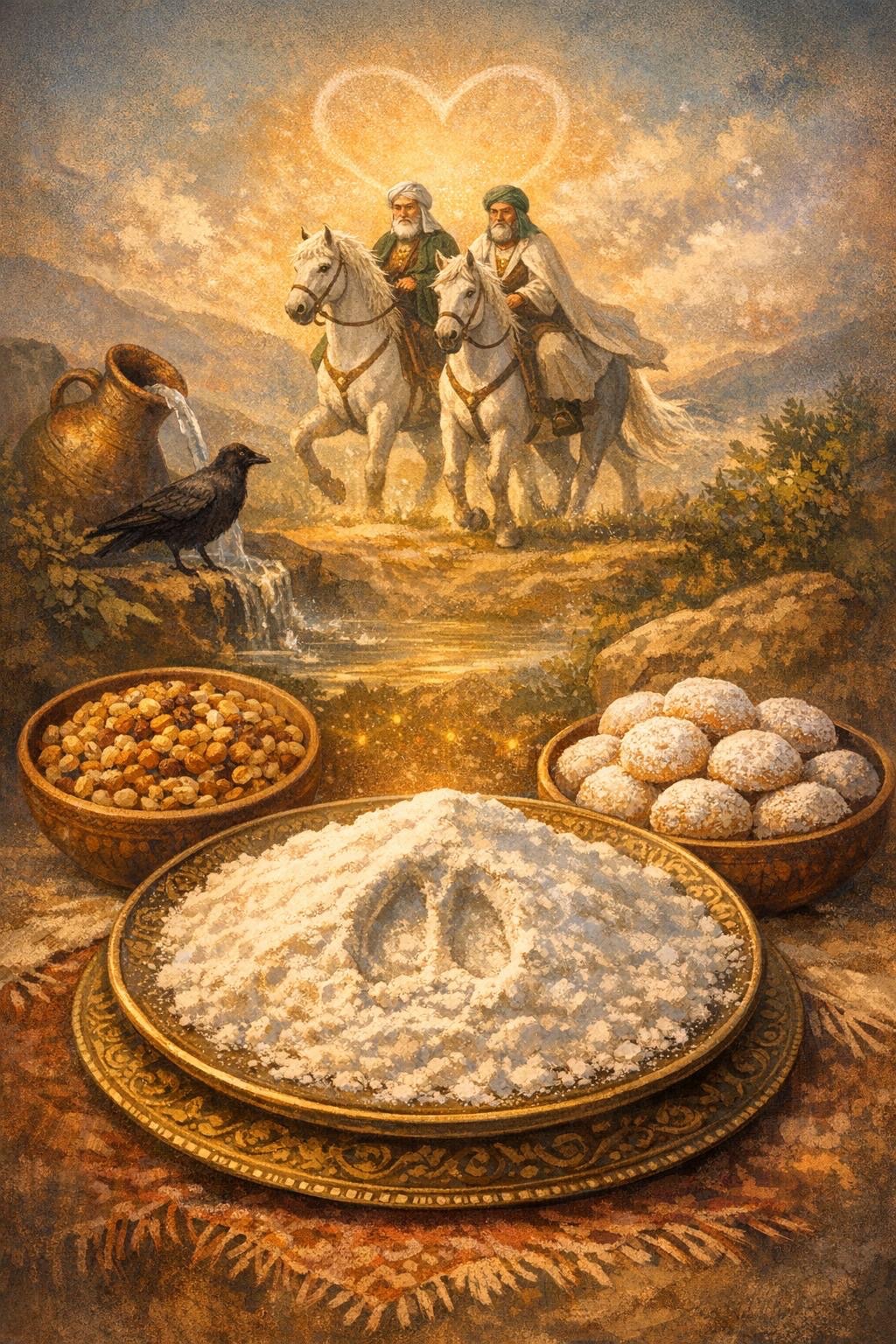
The holiday of Xidir Êliyas and Xidir Nebî is one of the most important religious holidays in Sharfadin. The holiday is dedicated to Xidir Êliyas and Xidir Nebî, two sacred and immortal beings who are associated with life, protection, and love. For Ezidis, this holiday is a time to reflect on healing, destiny, renewal, and the hope that blessings will enter the home. In 2026, the fasting days fall on 16, 17, 18, and 19 February. The feast is celebrated on Thursday 19 February (dedicated to Xidir Êliyas) and Friday 20 February (dedicated to Xidir Nebî).
The Story About Xidir Êliyas and Xidir Nebî
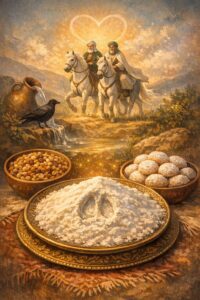
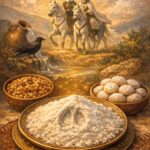
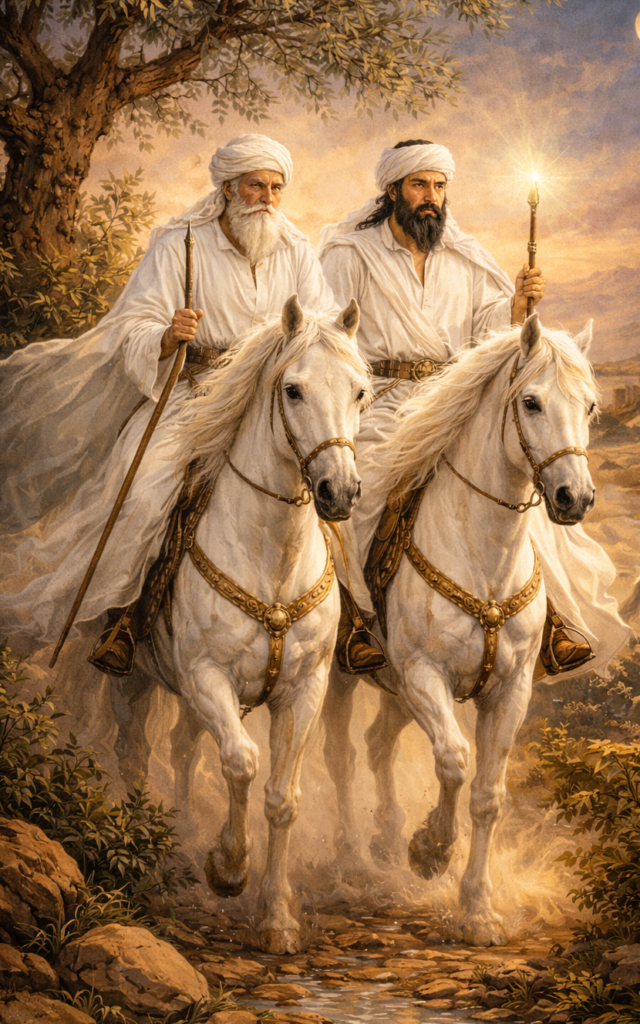
In Ezidi sacred hymns (qawls) and oral tradition, Xidir Êliyas and Xidir Nebî are described as immortal beings riding white or silver horses (Xidir Nebî û Xidir Êliyas siyarê hespêd boz). They are sometimes presented as brothers, sometimes as father and son, and in some traditions even understood as manifestations of one sacred reality. They are mentioned in several important qawls and narrative cycles, including the legend of Iskander (Alexander the Great), the tale of Ashik Harib and Shah Sanam, and the kawl of Darwesh Adam. Their presence in these sacred texts demonstrates their central theological position within Sharfadin.
Xidir Êliyas is the patron of travelers, the sick, the poor, and sea voyagers. He represents divine protection during hardship and physical vulnerability. Xidir Nebî is the fulfiller of wishes and the patron of love and destiny. He is associated with emotional longing, marriage, and matters of the heart. Together, they embody protection and fulfillment, safeguarding both the body and the soul.
The Legend of the Water of Life
According to Ezidi tradition, Xidir Êliyas and Xidir Nebî lived during the time of Iskander the Two-Horned (Alexander the Great). A prophecy foretold that Iskander would soon die unless he drank from the Water of Life (Ava Hayatê).
Only Xidir and Êliyas could obtain it. After overcoming many trials, they filled a jug with the sacred water. On their return, they rested beneath an olive tree, hanging the jug on a branch. While they slept, a raven (in some versions, a crow) pierced the jug and drank a drop. The jug broke and the water spilled.
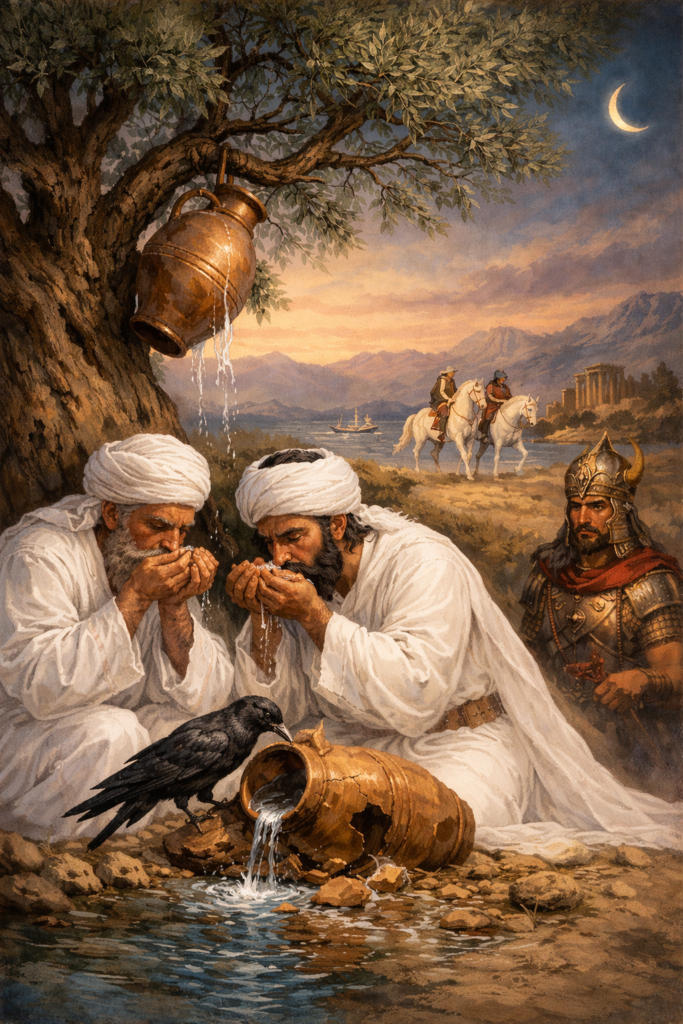
Xidir and Êliyas gathered the remaining drops and drank them, gaining immortality and supernatural power. Iskander was told the jug had broken. From that moment, they became eternal travelers, riding across land and sea, visiting homes and bringing healing and blessing.
Ritual Practice and Sacred Observances
Xidirliyas is preceded by fasting from sunrise to sunset. In 2026, fasting is observed from 16–19 February. Fasting is voluntary, except for Ezidis named Xidir or Êliyas, for whom it is obligatory.
During the sacred week:
– No blood may be shed; animals must not be slaughtered.
– Long journeys are avoided; one sleeps at home.
– Bathing and combing hair are avoided, as the saints’ horses are believed to be traveling.
– Mopping the house is traditionally avoided.
These practices emphasise reverence, stillness, and spiritual attentiveness as the sacred beings are believed to move through the world.
Ritual Foods and the Sacred Seven
Food preparation reflects the symbolism of the Sacred Seven in Sharfadin.
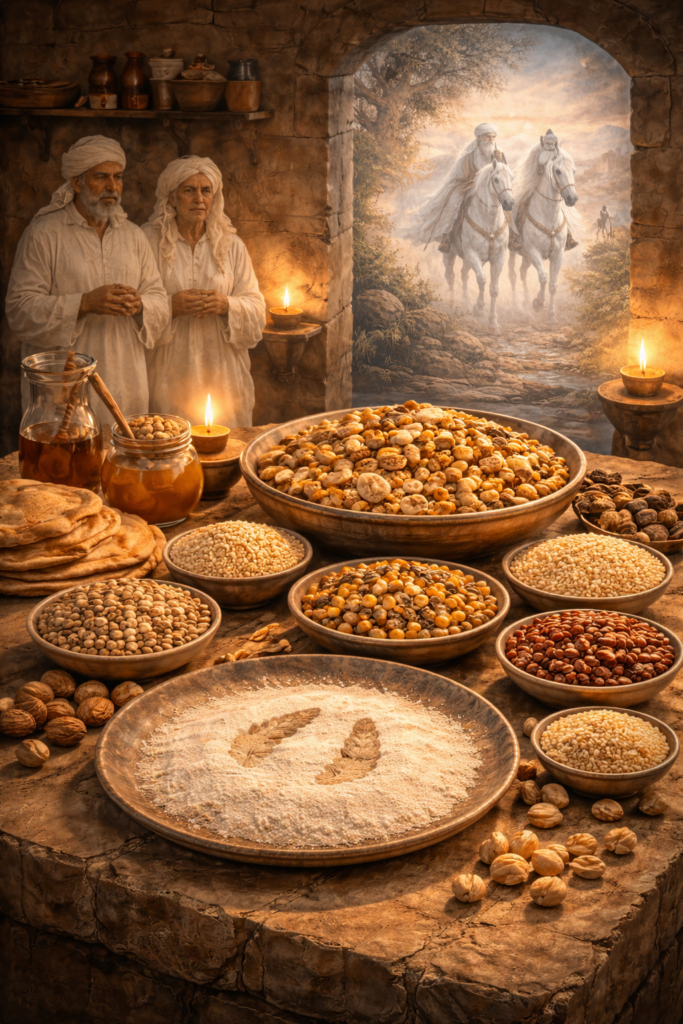
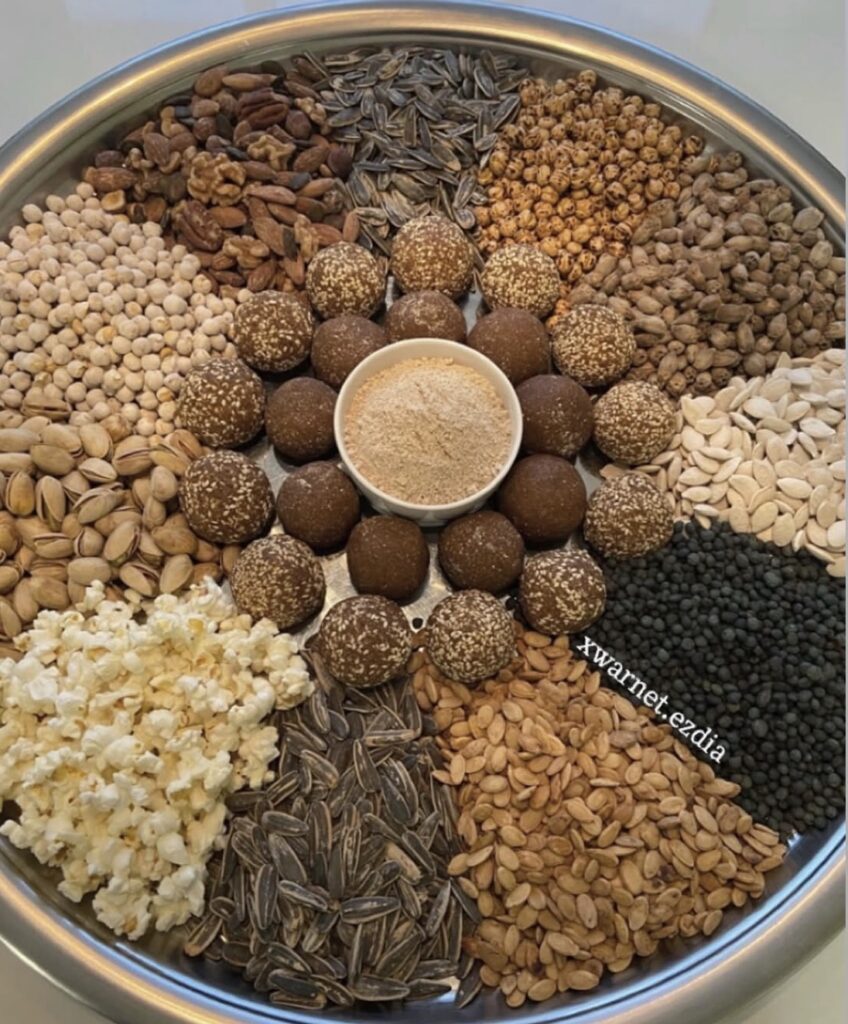
On the first fasting day, families prepare Qelandik (Qelatik), roasting seven types of grains and legumes, wheat, chickpeas, lentils, corn, sesame, barley, beans, among others. On the final fasting day, a sweet dish called Pekhûn (meaning “without blood”) is prepared, typically from wheat, chickpeas, and sweeteners such as honey or syrup. Seven ingredients symbolize sacred completeness. In some homes, seven bowls of salted hard foods are prepared. The number seven reflects divine order.
The Hoofprint Sign
On the first feast day (Thursday), a plate of Pekhûn or flour is placed on a raised surface inside the home. The next morning, families look for an imprint resembling a hoofprint. If present, it is interpreted as a sign that Xidir Êliyas and Xidir Nebî have visited. The sign represents protection and blessing for the household.
Dream Traditions and Destiny
On the eve of the feast (êvara idê), salty biscuits known as Kursike Şor or Totikê Şor are baked. Those who eat them must not drink afterward and should sleep thirsty. It is believed that a person who sleeps thirsty may dream of their future spouse, who offers them water in the dream. If the dreamer wakes and drinks water in reality, the dream ends.
This ritual reflects the theological role of Xidir Nebî as patron of love and destiny.
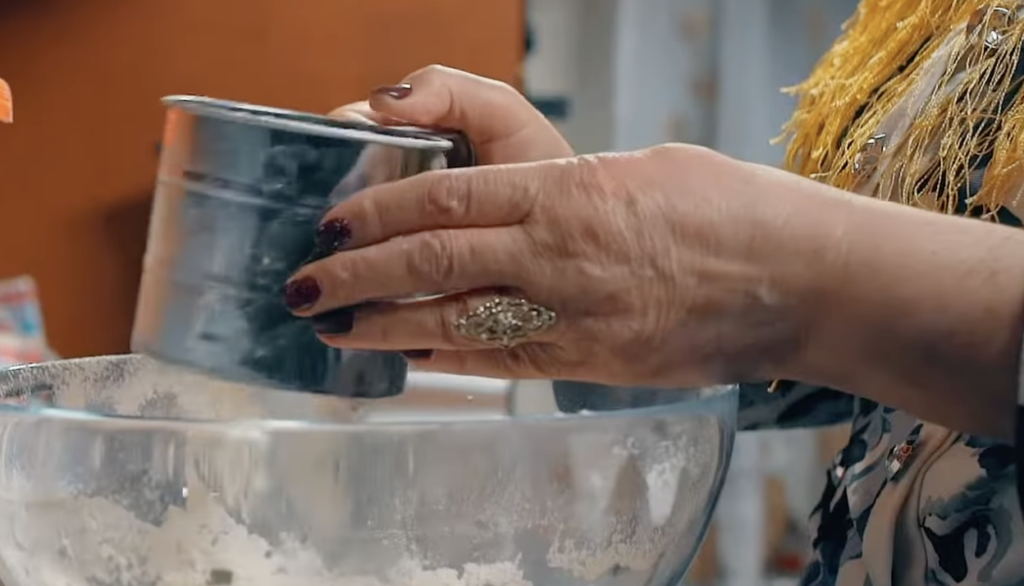
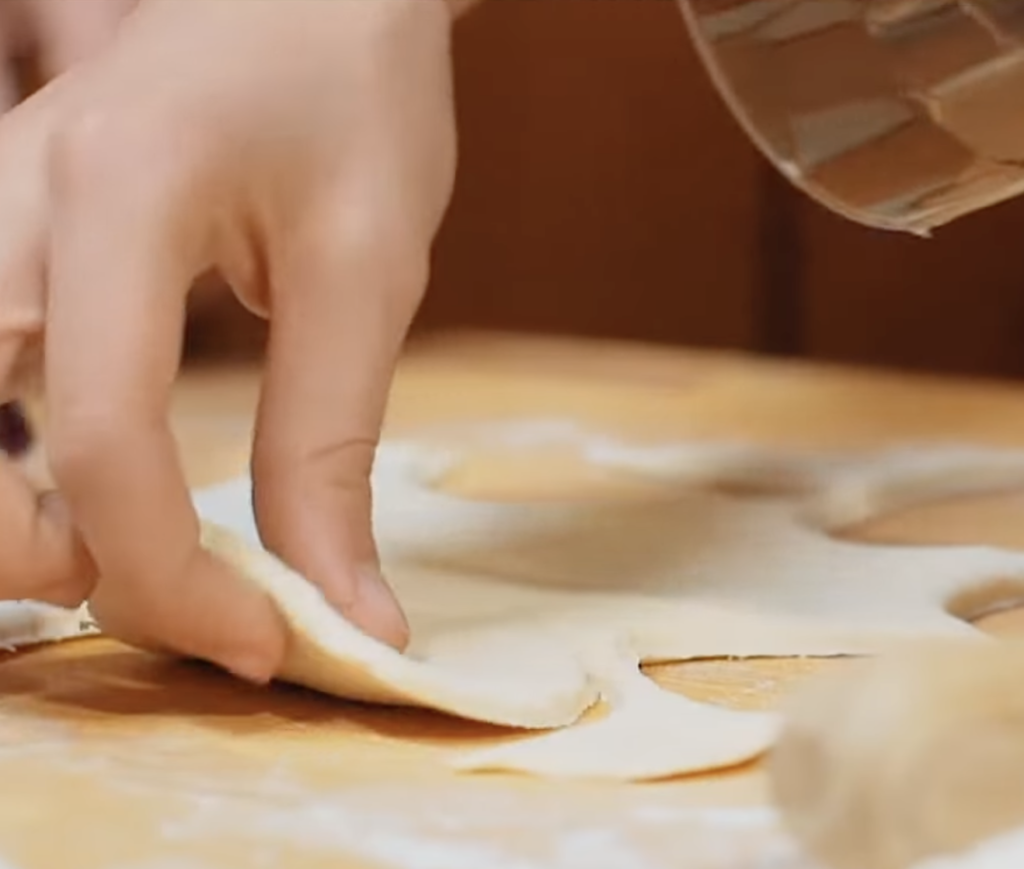

These images illustrate the preparation of the salty cookies (Totike Şor) during Xidirliyas. They are taken from the music video “Ayda Xidir Nebi” by Rostame Sheko. Ezidi Times recommends this video to our readers, as it vividly shows the traditions surrounding the cookies, the dream ritual, and the belief in discovering one’s future life partner. You can watch the full video here:
With the children’s group “Zarkên Şems” (children of the Sun).
Watch also the second music video by Rostame Sheko:
Cutting the Hair
Between Thursday evening and Friday evening, each Ezidi cuts a small strand of hair. For women, whose hair carries spiritual significance, this is one of the few occasions outside mourning when cutting hair is permitted. The act symbolizes cutting away misfortune. It is also associated in popular belief with relief from persistent headaches or hair loss.
Comparative Context
The figures of Khidr and Ilyas are known across the Middle East and surrounding regions under different names and interpretations. In Iran he is known as Khizr; among Alawites as Khoja Khizr; in Azerbaijan as Khidr Nabi; in Armenia he is sometimes associated with Surb Sarkis; in Ossetian mythology with Vastarji; and in some later identifications with St. George.
While these traditions differ in theology, Armenians, Azerbaijanis, and Ezidis all celebrate related winter observances, often in February.
Within Sharfadin, however, Xidir Êliyas and Xidir Nebî hold a distinct and internally developed theological meaning rooted in Sharfadin sacred texts and oral tradition.
End of Winter and Renewal
Xidirliyas marks the end of winter and the beginning of agricultural preparation. The phrase “Xidirliyas û Zivistan xilas” — “The holiday of Xidirliyas and winter is over”, expresses this transition.
The holiday unites theology, myth, household ritual, sacred food symbolism, seasonal renewal, and family devotion. It remains a living expression of Sharfadin, a time when Ezidis remain at home, fast, prepare ritual foods, reflect, and await the blessing of the riders on the white horses.
Ezidi Times wishes all Ezidis a blessed Xidirliyas, a celebration of life, love, and the sacred traditions of Sharfadin.