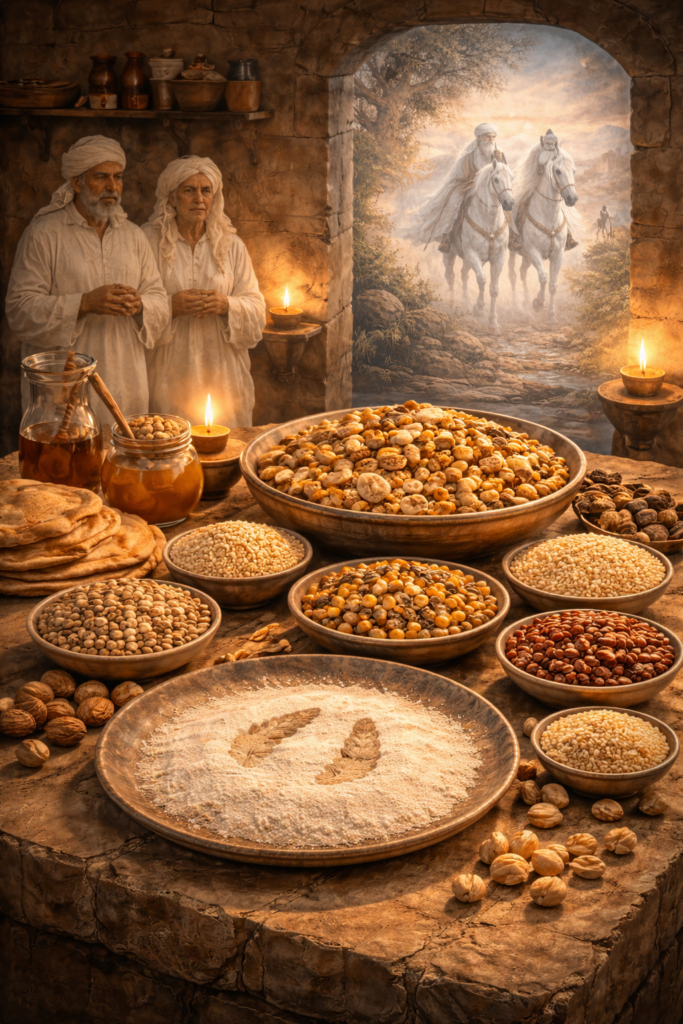
The Ancient Feast of Fertility, Renewal and Divine Blessing in Sharfadin
Among the most ancient and spiritually profound celebrations in the Ezidi religious (sharfadin) calendar is the sacred feast of Xidir...
Among the most ancient and spiritually profound celebrations in the Ezidi religious (sharfadin) calendar is the sacred feast of Xidir...
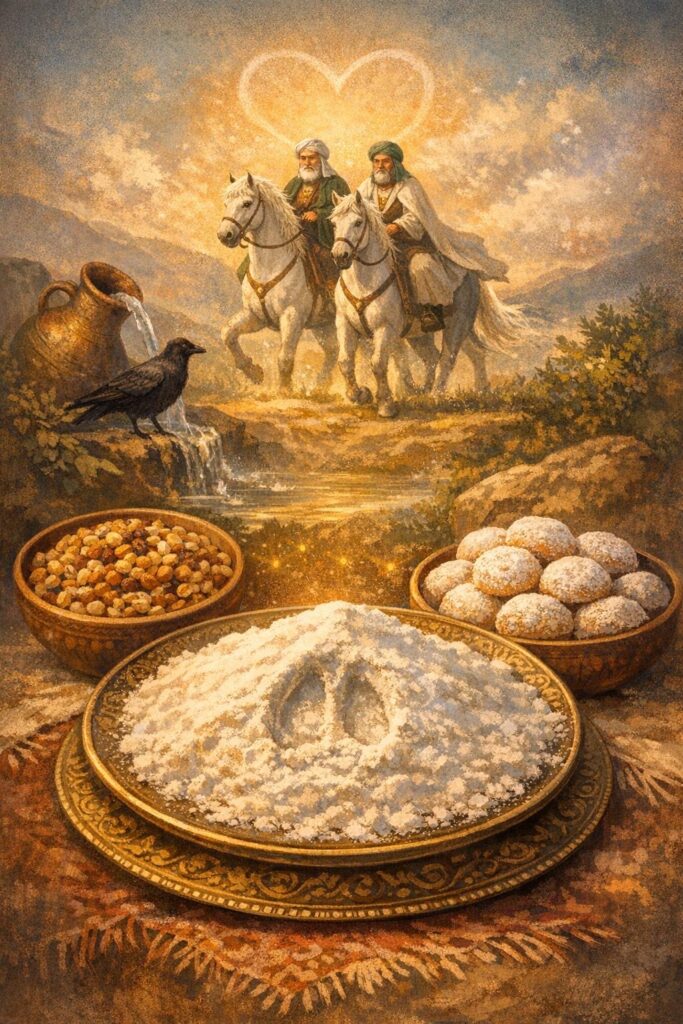
The holiday of Xidir Nebî and Xidir Êlyas is one of the most important religious celebrations among Ezidis, honoring two revered saints associated with protection, love, and life. Though venerated across multiple cultures—from Iran to Armenia and beyond—Ezidis maintain distinct traditions that blend sacred texts, local legends, and ancient rituals. The festival involves fasting, special plant-based dishes, and symbolic practices such as pêxûn preparation, hair-cutting for blessings, and matchmaking customs rooted in dreams. Folk celebrations include communal gatherings, ceremonial songs, and playful rituals like dolidang, connecting spiritual devotion with social cohesion. Across history, Xidir and Êlyas have absorbed traits from pre-Islamic and pre-Christian myths, linking Ezidi practice to ancient regional narratives of divine guidance and the quest for life-giving waters.
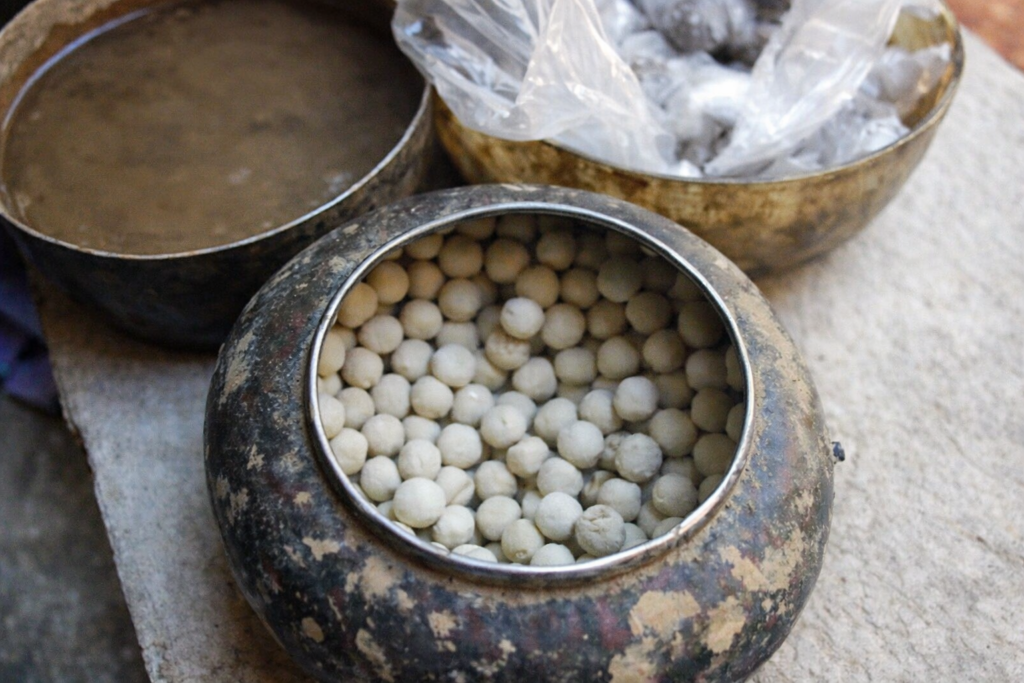
The holiday of Xidir Êliyas and Xidir Nebî is a sacred Ezidi holiday honoring the immortal saints Xidir Êliyas and Xidir Nebî, guardians of life, love, and protection. Observed each year in February, the days combine voluntary fasting, preparation of symbolic foods called the Sacred Seven, and rituals that invite blessings into the home. From the mystical hoofprint sign to the making of Pekhûn, the holiday celebrates healing, divine guidance, and the renewal of both body and spirit.
On the night between 3rd and 4th February, 2026 marks Şevberat, the sacred night of forgiveness and purification for Ezidis....
E'yda Çilê Zivistanê bimbarek-pîrozbe! Twice a year, Ezidis celebrate the sacred feast of çla—the Forty Days—marking both the summer and winter...
Ezidi Times warmly congratulates all Ezidis around the world on the sacred holiday of Aida Ezdit.
On the 16th of December, the three-day fast of Rojîyê Êzid began, honoring Sultan Ezid (Ezdit), a manifestation of the Creator in the Sharfadin faith. This sacred period of fasting, prayer, and reflection celebrates the birth of light, spiritual purification, and the divine presence in the world. Rojiyên we bi xêr û xoşî bin!
This week, from 9 to 12 December 2025, Ezidis observe Aida Xwudane Male, honoring the family patron saints with fasting, reflection, and the sacred Dua Sifrê prayer—a ritual that reconnects families with their spiritual heritage and the blessings of Sharfadin.
The annual olive harvest in the sacred valley of Laleş begins on 27 November, as Ezidis gather olives that will become the oil to light every lamp of the temple. This centuries-old ritual brings the community together — men shaking the branches, women collecting the fruit, and temple workers preparing the oil that fuels the 365 lamps, a symbol of Sharfadin’s enduring light. Amid a year of drought, the harvest continues, linking the valley, its people, and the rhythms of the sacred season. In December, the lamps burn as the community looks toward winter celebrations: Aida Êzîd, Aida Xwudane (male), and Aida Sêsims.
Explore the ancient monotheistic religion of Sharfadin, its belief in a single God and seven Archangels, the Ezidi caste system, and the myths surrounding Tausi Malak. Learn about the core principles of Sharfadin and the truth behind common misconceptions.
Photo: CC Wikimedia Commons Newroz, a time-honored tradition signifying "New Day," holds profound cultural and historical significance for millions of...