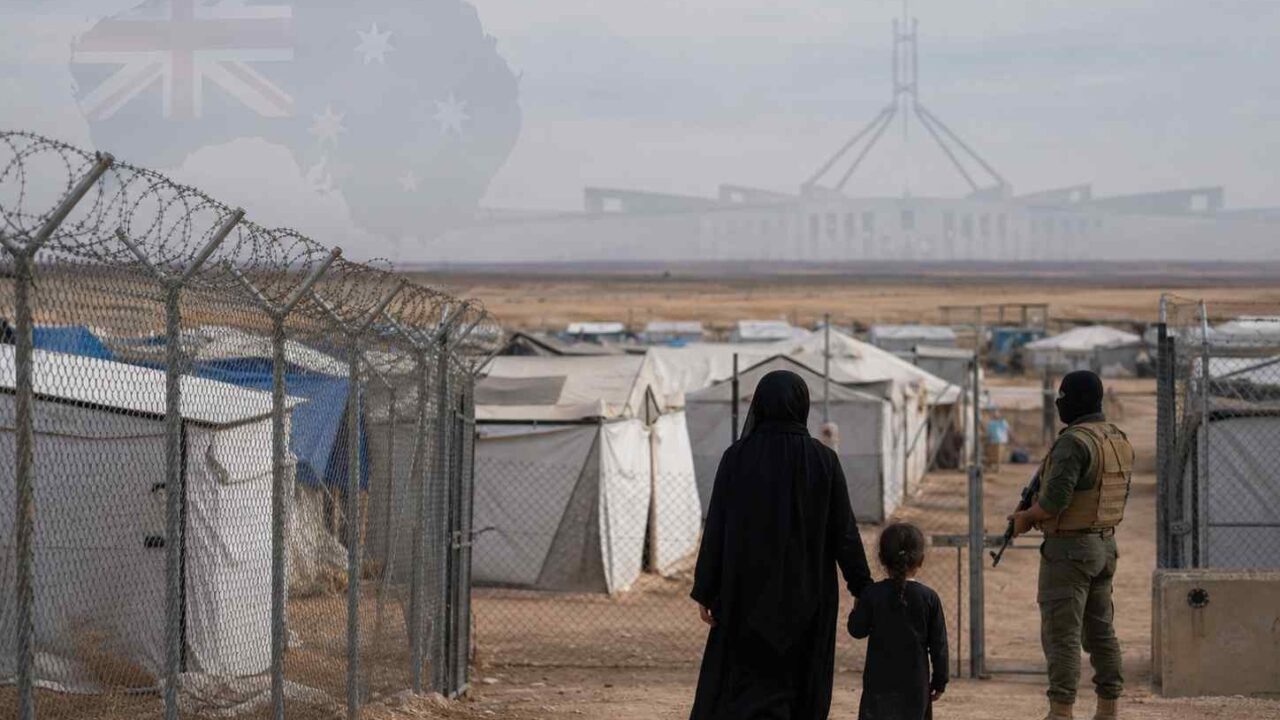
An Australian woman linked to ISIS is expected to return from Syria amid serious allegations concerning the abuse of an Ezidi girl who was held captive in an ISIS household nearly a decade ago.
The woman, identified as Hodan Abby from Sydney, left Australia for Syria in 2014 and later spent years in ISIS-controlled territory and detention camps in north-eastern Syria. She had previously been prevented from returning to Australia under a Temporary Exclusion Order, but has now reportedly been granted permission to return under strict conditions.
The allegations concern an Ezidi survivor, whose name has been changed for her protection. She was abducted by ISIS as a child during the 2014 genocide against the Ezidi people and was later taken to Syria, where she says she was held in the home of a foreign ISIS fighter known as Abu Osama and his wife, known as Umm Osama.
The survivor alleges that she was subjected to sexual violence by the ISIS fighter and physical abuse by the woman in the household. She was around nine or ten years old at the time. Another Ezidi survivor has also reportedly described seeing signs of abuse during visits to the same household.
The identification of Hodan Abby as the woman known as Umm Osama has not been formally confirmed in court. However, investigators and specialists who have worked on ISIS-related cases have reportedly linked the name Umm Osama to Abby based on survivor accounts and detention records.
Australian authorities have not publicly confirmed whether charges will be brought in this specific case. Two other Australian women returning from Syria have previously faced charges linked to the treatment of Ezidis under ISIS.
For Ezidi survivors, cases like this remain part of the wider struggle for justice after the 2014 genocide. Thousands of Ezidi women and children were abducted, sold, forcibly transferred, and subjected to sexual violence and forced labour by ISIS. More than a decade later, many survivors are still waiting for accountability.
The case also raises serious questions about the responsibilities of foreign nationals who joined or lived under ISIS, and whether justice systems in their countries of origin will fully investigate crimes committed against Ezidi victims.
Ezidi Times hopes that Australian authorities will use the full scope of Australian law when investigating crimes committed against Ezidi victims. These cases should not be treated only as terrorism-related matters. Where the evidence supports it, they should also be examined as possible cases of genocide, crimes against humanity, enslavement, sexual violence, and other international crimes.
This distinction is important. Terrorism charges may address links to ISIS, but they do not fully reflect the crimes committed against the Ezidi people as victims of genocide who were targeted due to their ethnic and religious identity.