
Nobel Peace Prize laureate Nadia Murad has dedicated her life to a mission few can fully grasp: transforming the horrors she endured into a global call for justice. At 21, her village of Kocho in Sinjar, northern Iraq, became ground zero for one of the most brutal attacks in recent history. Militants from the so-called Islamic State targeted the Ezidi community, killing hundreds—including six of her brothers and her mother—and taking thousands of women and children as sexual slaves. Nadia herself was captured, subjected to months of abuse, and eventually forced into the heart of IS-controlled Mosul, where she endured relentless torment.
Her escape marked the beginning of a journey that would take her far beyond the camps for the displaced, first to Germany, and eventually to the world stage. Today, Nadia travels widely, sharing the stories of survivors, advocating for accountability, and building bridges between those who have suffered unimaginable atrocities in Iraq, the Congo, Colombia, and beyond.
Earlier this month, Nadia Murad arrived in Colombia as the first guest at the She Is Global Forum 2025 in Bogotá. Her appearance opened the event, highlighting her dual mission: to elevate the voices of survivors of sexual violence and to push for real justice. Speaking to attendees, she reflected on the lingering scars of her past and the responsibility that survival carries. “When a woman survives while others remain in captivity or silence, she carries a duty, not only to herself but to her community, to speak,” she said. She emphasized that sexual violence is not random; it is a weapon of war used strategically to destroy communities, and accountability is the only path toward peace.
The Nobel Peace Prize, which Nadia received in 2018, has amplified her message, giving her access to political leaders, international institutions, and platforms where the voices of survivors can no longer be ignored. But as she reminds those she meets, recognition alone cannot repair what has been lost. Justice requires action, reparations, and sustained attention.
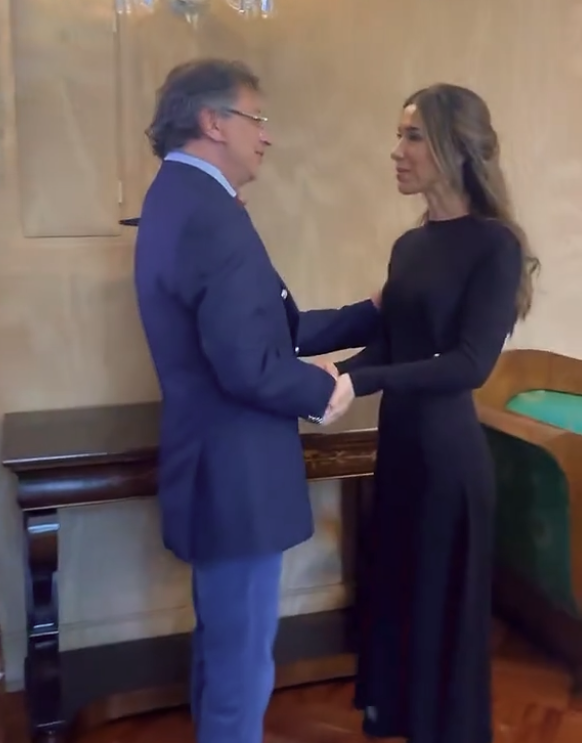
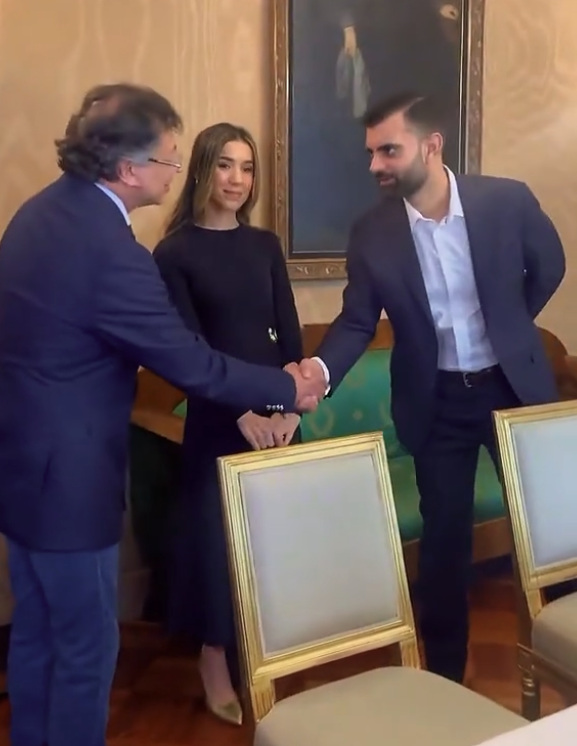
In a meeting with Colombian President Gustavo Petro, Nadia pressed for one such measure: formal recognition of the Ezidi genocide carried out by IS. She explained that acknowledgment is not symbolic; it is a crucial step toward ensuring survivors are heard, protected, and supported. Beyond recognition, she discussed mechanisms for reparations, legal accountability, and documentation centered on survivors’ needs. She drew parallels between the struggles of Ezidis in Iraq and women affected by conflict in Colombia, noting that thousands of survivors globally remain silenced by stigma, fear, or lack of support.

Throughout her work, Nadia has consistently stressed that justice is multi-faceted. Some survivors require financial aid, others need psychological support or safe spaces to share their experiences without fear. She has developed frameworks to guide governments and institutions in supporting survivors effectively, ensuring that those who have suffered do not have to relive trauma merely to receive help.
Nadia’s message to survivors worldwide is clear: perseverance matters. “You may not change the world immediately, but you can change your world, your community,” she told attendees in Bogotá. Her own journey, from a small village in Iraq to displacement camps, from captivity to the halls of international forums, stands as proof. Even amid fear and stigma, she transformed her trauma into advocacy, reminding the world that the Ezidi genocide is not forgotten and that survivors’ voices must shape the path forward.
As IS has receded, the challenges remain. Many Ezidis are still missing, some remain in captivity, and many communities are struggling to rebuild. The global community has witnessed the atrocities, yet political will and support for long-term recovery lag behind. Nadia Murad continues to confront this reality, demanding that the stories of Ezidis, and survivors everywhere, be recognized, protected, and honored. Her fight is not only for memory but for justice, for reparation, and for a world where the next generation of women does not endure what she survived.